
October 16 2026 13:10
SOUTH AFRICA
If one theme ran through the stories Property Flash published this week, it was the gap between the health of South Africa’s listed property sector and the state of the cities it operates in. Reits are reporting their best numbers in years, while Johannesburg heads into a municipal election that could decide whether its property market catches up with Cape Town or keeps falling behind.
Between those two poles sat a farewell to one of the JSE’s oldest names, a 10-year Formula 1 deal that puts Kigali on the map for property developers, a green certification for a Fourways estate, three new Gauteng retail and residential projects, and practical advice on moving money offshore. Here is a round-up of the week.
A standout results season so far
The week opened with a Sunday overview of the reporting season that ran from late July to early October, and the picture was overwhelmingly positive. Rental income is growing faster than inflation, vacancies are down, funding costs have eased and dividends are rising.
Hyprop, Attacq, Fortress and Resilient all grew dividends by more than 10%. Attacq beat its own guidance with distributable income per share up 15.5%, driven by Waterfall City, where R2.2bn of developments are under construction or approved. Hyprop lifted its dividend 14.4% and cut its loan-to-value ratio to 28.5%. Fortress grew distributable earnings 14.2% on the back of its logistics portfolio and raised its 2027 guidance to about R2.46bn. Growthpoint, the sector’s largest fund, increased its dividend by 7.4% and plans to spend R2bn to R3bn a year on local developments over the next five years. Resilient’s Spanish centre, Salera, was virtually fully let, while SA Corporate’s residential book now makes up about 49% of its local portfolio.
The offshore counters were just as strong. NEPI Rockcastle raised guidance and made its first move outside Central and Eastern Europe with the €252m purchase of MegaPark Barakaldo in Bilbao. Hammerson’s interim dividend rose 22% after it bought half of Manchester Arndale, and Sirius Real Estate continued to add German and UK business parks, including defence-related assets.
The SA REIT Association’s Chart Book shows rolling 12-month distribution growth of 10.58% at end-June, a fifth straight quarter ahead of inflation. Share prices have been less steady, with the sector giving back 5% in August, and companies flagged risks from the Middle East conflict, higher oil prices and sticky inflation. Most also expect growth to moderate in the 2027 financial year.
More funds will report financial results in November and December including Redefine, Stor-Age, Dipula, Emira, Nepi, Octodec, Vukile and Accelerate (if they get their act together).
Equites nears the end of its UK exit
Equites Property Fund delivered one of the season’s last big sets of numbers on Thursday. The logistics landlord declared an interim dividend of 72.57c a share for the six months to August, up 5.1%, and reaffirmed full-year guidance of 147.7c to 150.5c.
The bigger story was the near-completion of its retreat from the UK, a market it entered in 2016. In May it sold its Aviva portfolio of five distribution centres to an ICG Real Estate fund for £200.5m, releasing about £95m once the associated debt was repaid. That sale cut its loan-to-value ratio from 35.1% to 28.1%.
Because its South African pipeline could not absorb the cash immediately, Equites parked about three-quarters of the proceeds in three FTSE-listed UK logistics Reits. The move has already paid off: Prologis’s offer for Segro let it lock in a gain that added 12c to net asset value. Those shares, worth R1.2bn, will be sold over the next 18 to 24 months as local projects draw funds.
At home, like-for-like rental growth was 5.3% and vacancy 1.5%. Seven developments worth R2.4bn on completion are under way, including facilities for Tiger Brands and Takealot at Riverfields, Shoprite in Benoni and DHL in Boksburg, which is Equites’ first South African lease with the global logistics group. All seven are being built at yields on cost of 8% to 9%, ahead of the group’s marginal cost of debt. Management called finding new land a strategic imperative, with development land making up just 1.2% of the portfolio. Heavy hedging means this year’s two 25 basis point repo rate hikes barely moved its cost of debt.
SA Reits as a safe haven
The same day, the latest episode of the Another Brick in the Wall podcast went live. Michael Avery and Alistair Anderson spoke to Ian Anderson, portfolio manager and head of listed property at Merchant West Investments, about how resilient local Reits have been in 2026 and whether they offer shelter from turbulent markets abroad. Anderson, who has worked in SA listed property since 1996 and compiles the SA REIT Association’s monthly Chart Book, is one of the best-placed people in the country to make that case. The episode is available on iono.fm and Spotify.
Tongaat Hulett’s final curtain
At the other end of the market, the JSE confirmed it will remove Tongaat Hulett from its Main Board on 3 November, ending a listing that dates back to 1952. Its shares were suspended in July 2022 and the company has been in business rescue since October that year. The exchange said there was no realistic prospect of the group meeting listing requirements again, and Tongaat itself said none of the likely outcomes of the rescue process would leave anything for shareholders. The future of the sugar business, which runs three mills and supports more than 17,500 cane growers, now rests with the Vision consortium and the Industrial Development Corporation.
For the property industry, the case remains significant because the alleged wrongdoing centred on Tongaat Hulett Developments, which controlled the land bank that shaped Ballito and Umhlanga. Prosecutors allege land sale agreements were backdated between 2015 and 2018 to bring forward profits. Seven accused, including former CEO Peter Staude and former property arm head Mike Deighton, face charges linked to an alleged R3.5bn fraud. More than four years after their first court appearance, the trial has still not started, and the matter has been postponed to 18 March 2027. None of the accused has entered a plea or been convicted. The people who have been wronged wait in anticipation of justice.
Joburg’s election: the stakes for property
With the 4 November municipal elections less than three weeks away, two pieces examined what is at stake in Gauteng.
In a guest article, Bashier Adam, tax director at Nexia SAB&T, argued that the improving national story, including six consecutive quarters of GDP growth and an exit from the FATF grey list, masks deep local dysfunction. He pointed to official unemployment of 33.6%, a foot-and-mouth outbreak declared a national disaster, and coal exports through Richards Bay that remain well below the terminal’s design capacity. Semigration to the Western Cape, he noted, is pulling skills and capital towards better-run municipalities. Social Research Foundation polling he cited gives the DA the lead in both Johannesburg and Tshwane, where Helen Zille and Cilliers Brink are the party’s mayoral candidates.
For businesses, Adam’s key warning was about rates and tariffs. Johannesburg’s R97.1bn budget raised electricity by 8.6% and water by 11%, and he described a spiral in which ratepayers move to solar, the city’s revenue base shrinks and tariffs rise further. His advice was to build above-inflation municipal increases into every model, whoever wins.
In an opinion piece, Alistair Anderson made the case for an ANC–DA coalition in the city. With Ipsos polling putting the ANC on 31% and the DA on 27%, and no party near a majority, he argued that only a partnership of the two largest parties could give Johannesburg a council stable enough to last a full term without being held hostage by small parties. He acknowledged the obvious objections, including voter backlash, clashing campaign messages and the possibility that the polls are wrong.
Geffen: buy in Joburg
On Wednesday, Yael Geffen, CEO of Lew Geffen Sotheby’s International Realty, told Property Flash that Johannesburg offers investors the best value in the country, and that the price gap with Cape Town could narrow if governance improves.
She urged buyers to focus on affordability rather than trying to predict interest rates, noting that nobody can forecast the rate cycle over the life of a 20-year bond. Johannesburg stock is tight because many sellers are waiting for the election outcome, though Fourways, Bryanston, Morningside and The Parks continue to sell quickly while the East Rand is out of favour.
She was less upbeat about Cape Town’s infrastructure, saying a trip that once took 10 minutes now takes 45, and suggested the city needs a rail service on the scale of the Gautrain. Geffen also highlighted renewed interest in KwaZulu-Natal’s north coast, a recovering luxury market and growing foreign demand from buyers who now see South Africa as a relatively safe and affordable haven. Her verdict on how locals are coping with power and water problems: South Africans simply make a plan.
Riverstone earns EDGE certification
Craft Homes’ Riverstone Wetland Estate in Fourways received preliminary EDGE certification from the Green Building Council South Africa. The estate, built around the rehabilitated Magaliessig wetlands, projects energy savings of 37.54%, water savings of 20.76% and a 36.07% cut in embodied energy in materials, clearing the 20% threshold in all three categories. CEO Reinier van Loggerenberg said having the numbers independently audited showed the estate’s wetland-first design held up in practice. The certification follows Craft Homes’ five wins at this year’s International Property Awards.
The article placed Riverstone alongside other EDGE-certified projects, including Mall of Africa, Balwin’s build-to-rent pipeline and Attacq’s Nexus 1 at Waterfall. It also set out the green home loan incentives offered by the major banks, from interest rate discounts to cash-back rebates. The 275-unit estate is 500m from Montecasino and Fourways Mall, and Phase 1 is already occupied.
F1 heads to Kigali
Tuesday brought news that Formula 1 and the government of Rwanda have signed a 10-year deal to stage the African Grand Prix at a new circuit in Bugesera, about 40km south of Kigali. The first race is expected no earlier than 2030 and would be the first on the continent since Kyalami in 1993. President Paul Kagame announced the deal alongside F1 CEO Stefano Domenicali and FIA president Mohammed Ben Sulayem, capping a bid Rwanda formally launched when Kigali hosted the FIA General Assemblies in December 2024.
Property Flash’s angle was the location. The track will sit beside the new Kigali International Airport, which is still under construction, as the anchor for a wider sports, tourism and commercial precinct led by the Rwanda Development Board, much as a regional mall anchors a greenfield node. Key questions remain unanswered, including the cost, who is paying and how Kigali’s hotel stock will cope. For South Africa, which was also bidding, it means a new regional competitor for event tourism, although sports minister Gayton McKenzie insists the country will still get a race.
Tax corner: offshore moves and transfer pricing
Nexia SAB&T contributed two more practical guest pieces. Bashier Adam unpacked April’s exchange control changes, which doubled the Single Discretionary Allowance to R2m and opened a direct route for South African trusts to distribute to offshore trusts. He warned that the allowance resets on 1 January, that the offshore trust must be specifically named in the local trust deed, and that SARS’s review amounts to a full audit. An unresolved question over whether section 7(8) could attribute offshore income back to residents means large transfers may warrant a binding private ruling.
Tax advisor Amy Moutinho explained how multinationals can defend related-party pricing on management fees, imports, exports and intra-group loans. She noted that the R100m documentation threshold is not a safe harbour, and that SARS’s new advance pricing agreement pilot, open since 1 September, is aimed at groups with turnover above R10bn.
Friday: three Gauteng projects move forward
The week closed with a burst of development news from Gauteng’s busiest suburban nodes, as two shopping centre projects and a luxury apartment tower all reached milestones on Friday.
The View opens at Fourways Mall
The View, the R100m dining, retail and lifestyle wing at Fourways Mall, opened officially on Thursday evening at a launch hosted by Roxy Burger, founder of beauty brand The Piercery. Set on the corner of Cedar and Witkoppen roads, the three-level atrium mixes indoor and outdoor space and is pitched as a more upmarket destination for the area, covering everything from morning coffee to evening dining.
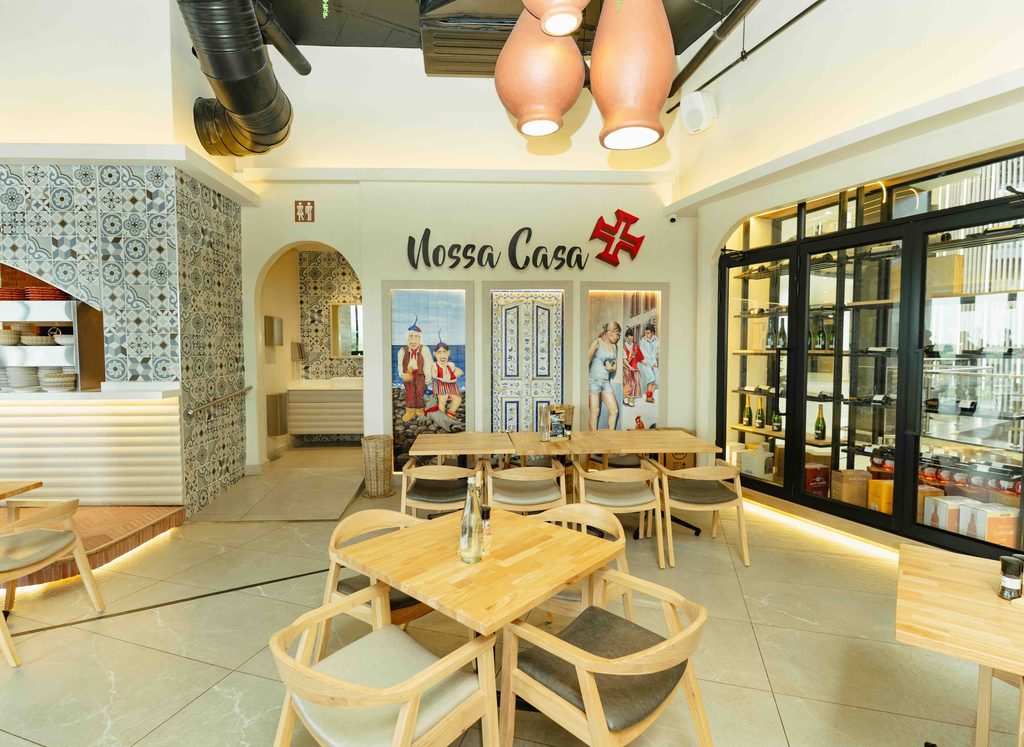
The tenant line-up leans heavily on food. The Pantry by Marble is already trading, a signing that manager Flanagan & Gerard (F&G) said took six meetings and months of negotiation, and tashas is on its way. They join Fournos, Nossa Casa, Nonnas Riviera, Banchan, Clay Cafe and Gelato Mania, with George’s Grill opening next week. Food Lover’s Market, Liquor Lane and Petworld XXL anchor the convenience offer, while Mangwanani, Loamari Pilates and a cluster of beauty brands cover wellness. Barber Rockets Man is expected later this year, and Workshop17 opens a flexible workspace in January 2027.
Fourways Mall general manager Juan Palm said the wing filled a clear gap for a more sophisticated offering in the area. The opening also matters for the mall’s ownership story. The 182,000m² centre is 50% owned by Accelerate Property Fund, which has been selling assets, and as Property Flash reported last month, F&G has the chance to take a stake that could eventually grow to full ownership. Accelerate could ultimately delist.
Aspire breaks ground at Waterfall City
In Midrand, Attacq and Tricolt Group broke ground on Aspire Waterfall City, a R624m development of 217 luxury apartments and penthouses that ranks among the largest residential projects in the R15.3bn precinct. Units range from R1.9m for an executive suite to R32.35m for a penthouse, and Tricolt says more than 76% have sold about a year after launch, many to repeat buyers.
The building connects directly to Mall of Africa and will offer a restaurant, pool bar, fire pits and bomas. Short-term letting through accredited operators is approved, which the developers present as a key part of the investment case, pointing to returns at the nearby Ellipse development. Construction will take about 22 months, with completion expected in the second quarter of 2028.
Attacq development executive David Oosthuizen said location had been one of the project’s strongest selling points, and that buyers want genuine connectivity, which he credited to Attacq’s infrastructure spend. Tricolt chairman Tim Kloeck highlighted the project’s long-term investment value. The groundbreaking ties back to the results season: Aspire is one of the Waterfall City projects Attacq flagged in its annual results as due for completion in early 2028.
Faerie Glen becomes The New Quarter
In Pretoria East, construction has started on a redevelopment that will turn Faerie Glen Shopping Centre into a mixed-use lifestyle centre called The New Quarter. Moolman Group is the main investor, in partnership with the Retail Evolution Fund.
The project adds about 8,000m² to the centre on the corner of Atterbury Road and Selikats Causeway. A new 3,000m² Woolworths, with a Woolworths Café and Woolworths Edit, will sit alongside a fully upgraded Pick n Pay Hypermarket, the centre’s long-standing anchor. New fashion, health and beauty stores, everyday services and a restaurant zone with outdoor dining are planned, and the design aims to make more of the two watercourses beside the site. Work will be phased to limit disruption, with opening set for November 2027.
Taken together, Friday’s stories show capital still flowing into Gauteng’s established suburban nodes while Johannesburg waits on its election. Landlords and developers are betting that well-located centres and homes will hold their appeal, whatever happens at the ballot box.
What to watch
The coming weeks are busy. Tongaat delists on 3 November, the municipal elections follow on 4 November, and Redefine, Octodec, Sirius, Vukile and Fairvest report results between November and early December. Equites will also refinance R0.8bn of listed notes at a November auction. The sector’s numbers are strong. How Johannesburg votes may decide whether its cities can keep pace. A number of property experts have said that the effects of the election’s outcome might not do much to real estate immediately. Others says a poor outcome will lead to dented confidence and a potential fall in property values over the next year to two years.
alistair@propertyflash.co.za
By Alistair Anderson
