
December 19 2025 10:49
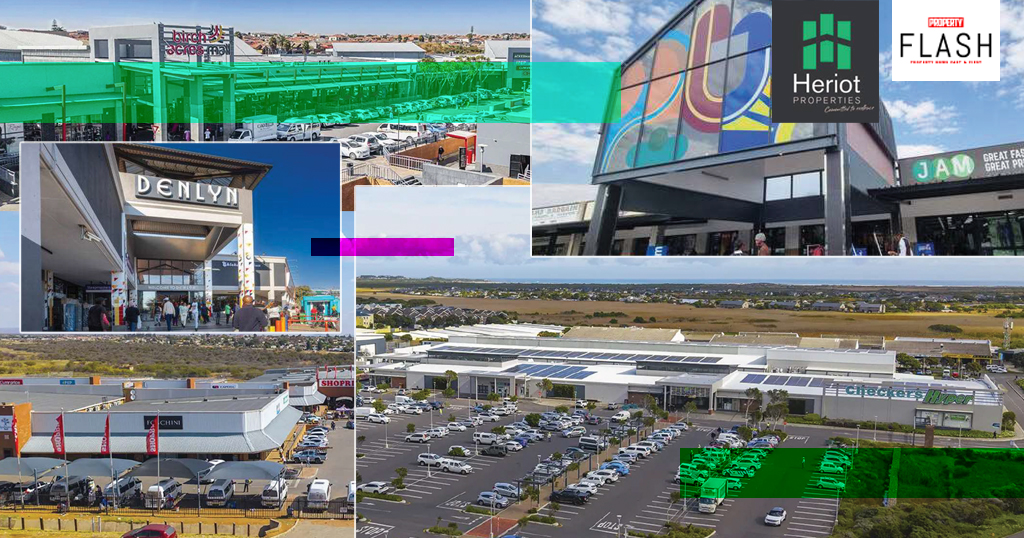
CAPE TOWN, SOUTH AFRICA
Heriot Reit has been an investment of choice this year for real estate pundits, thanks to its operations, investment and development teams’ shrewd capital allocation and asset management. The JSE-listed real estate investment trust (Reit) has been patient in a dynamic South African investment landscape and, after some five years, it has completed the acquisition of 100% of the shares of Safari Investments.
Heriot was formed nearly 28 years ago as a property business by a group of entrepreneurs who appreciated the long-term potential of South Africa as a new democracy. Heriot later gained Real Estate Investment Trust (Reit) status when it listed on the JSE’s AltX in mid-2017. South Africa began to adopt the Reit dispensation in late 2013 with the intention of formalising its commercial property industry. Reits, which are required to pay a minimum of 75% of their distributable income as a dividend each financial year, are favoured by investors who seek regular income returns through dividends. These investors include pension funds, their members and managers.
The company is committed to being patient and to delivering growing returns through the management of a high-quality property portfolio which has been accumulated through development and acquisition. When Heriot develops assets, it tends to hold onto them with the intention of deriving long-term value from them.
“Our focus spans essential retail centres, industrial facilities, offices, hospitality and residential holdings, all underpinned by quality tenants and sustainable leases,” co-founder and chairman Steven Herring says.
Heriot’s reputation has been earned through years of market outperformance and delivering formidable returns to its shareholders. The group employs a diverse range of people in terms of experience, skills and background.
The group appeals to the market because it understands every detail of its diversified portfolio of high-performing directly-held property assets. It has diversified its risk-return profile through its investments in JSE-listed Texton Property Fund and Safari Investments, the latter of which has recently become a wholly owned subsidiary. Safari Investments will be delisted in 2026.
Established in 1998, Heriot began constructing properties in 2000 and accumulating a South African property portfolio.
Heriot’s investors include individuals, corporates and community organisations. Heriot’s team recognised early in SA’s democratic era that millions of people were underserviced in terms of retail facilities and amenities. They tended to live in towns and areas which were located far from SA’s central business districts. By creating retail centres which were of a world-class standard and which the visitors could be proud of, Heriot could serve these people and their communities.
Herring explains that in the early 2000s, large national banks were nervous of funding retail centres township and inner-city areas. But if Heriot and other skilled developers could show these financial institutions that a retail centre would work because it was anchored by the retailers that the people living in that area needed to live better lives, that banks would be convinced and back more developments and business growth.
A quarter of a century later, Heriot has grown from a private real estate investment group into a national Reit built on strong governance, disciplined investment, and enduring tenant relationships.
The company’s sustainable leases and assets support both economic activity and community development. Having offices in Johannesburg and Cape Town, ensures that Heriot has a hands-on approach to asset management and operational performance.
Heriot’s notable consistency of attaining success can be seen in its financial performance. Notably, it broke records in the year to end-June 2025 with its distributable earnings jumping to R389,209m, reflecting a 26.1% increase on the 2024 financial year’s R308,754m. Reit investors seek distribution growth which outpaces consumer price inflation and Heriot’s return has far surpassed this hurdle.
Heriot’s remarkable growth was driven by several key factors such as the acquisition of developer, Thibault, in late June 2024 which led to the first-time inclusion of its comprehensive income, contributing R61.9m to distributable earnings, “alongside R19.1m from Thibault’s 10% shareholding in Safari Investments”, Heriot says.
Thibault also benefited from significant distributions through its investment in Texton Property Fund which declared distributions totalling 120.10 cents per share. Texton is a diversified property group with assets in SA and the UK. Its SA assets include P and A grade offices and its UK properties include an industrial estate in Burton Upon Trent and a retail centre in Carmarthen, Wales.
Now that post its year-end, Heriot owns 100% of Safari through its investor structure, retail specialist Safari will contribute far more in earnings in the 2026 financial year. Safari is a retail focussed Reit which owns properties in Gauteng areas including the likes of Atteridgeville, Mamelodi, Sebokeng and Heidelberg. Heriot has maintained key property managers from Safari who are able to achieve the best outcomes for the fund’s assets.
Safari Investment’s alignment of its financial year with Heriot resulted in 15 months of distributable earnings being included, with Heriot’s increased shareholding lifting its share of profits from R103.389m to R111.366m.
A 100-basis point reduction in the repo rate and lower weighted average cost of debt (9.73% versus 10.27% previously) also contributed favourably to Heriot’s financial results and more interest rate cuts are expected to take place in 2026.
Nedbank’s chief economist, Nicky Weimar says that more interest rate relief looms as inflation comes down to the SA Reserve Bank’s new 3% target, the state’s risk premium lowers, and the US Federal Reserve continues to cut rates.
Geopolitical tensions have eased while SA has left the investment Financial Action Task Force (FATF) grey list and also received two improved credit ratings from S&P Global Ratings.
The rand has strengthened against the dollar, which makes importing goods cheaper and therefore subdues inflation remains.
Heriot’s portfolio enjoys sound metrics with low vacancies of 1.6% announced in its 2025 financial year results, compared with 3.1% the previous year, supporting overall earnings growth.
The company says the inclusion of Thibault’s statement of comprehensive income for the 12 months ended 30 June 2025 significantly contributed to its 14.8% increase in net operating income (NOI) when compared to the prior period with additional growth achieved through Safari Investment’s internalisation of electricity and water utility management.
Heriot Reit’s distribution per share (DPS) of 121.91 cents for the reporting period reflected a 14.3% increase compared with the 106.69 cents per share declared in the 2024 financial year. The company says this growth in DPS was not directly aligned with distributable earnings as the Thibault acquisition initially led to an approximate 4% dilution in DPS but delivered a 7% increase in net asset value (NAV) per share. As Heriot’s acquisition normalise through the system, the group’s results will continue to improve.
Heriot’s net asset value (NAV) per share increased 17.5% from R17.53 as at 30 June 2024 to R20.59 as at June 30 2025, driven by an increase in the value of its property portfolio and supported by positive rental escalations on renewals and re-lets across its assets.
Heriot’s board declared a final dividend of 65.07 cents per share for the six months to end-June 2025, representing a 14.5% increase compared to the final dividend of 56.81 cents per share for the same period in 2024 with its management team pursuing growth of 10% to 15% in its dividend per share for 2026 financial year.
Heriot is guided by the company’s core values of excellence, transparency and long-term thinking, Herring explains.
Speaking of the Safari deal, he says his team applies these values to any deal. They recognised that Safari Investments, which has historically owned retail centres which were developed for underserviced customers thereby fitting into Heriot’s business model, offered long-term value to investors. Herring spent about five years from early 2020 until late 2025 working to acquire Safari, while improving its operations and advancing its investment strategy along the way.
Herring says patience has paid off for Heriot and Safari’s investor base.
“This is a transformative moment for both parties. We have added R4.2bn in assets to our portfolio and rationalised the business. Initially some Safari investors had a different outlook from us for the fund. After acquiring a controlling stake, we showed that we could improve the company and enhance value for shareholders,” he says.
Going forward, the group will look for more transformative deals which add value to Heriot and all of its stakeholders’ lives.
The group maintains numerous development projects across Heriot and Safari too.
“As a mid-cap fund with R13bn in assets, we are able to serve investors who appreciate the long-term reliability of property as a rewarding investment. We have believed in this asset class for nearly three decades and will remain patient in our pursuit of everyday excellence,” Herring says.
alistair@propertyflash.co.za
Partner content for Heriot Reit
