
October 6 2026 16:30
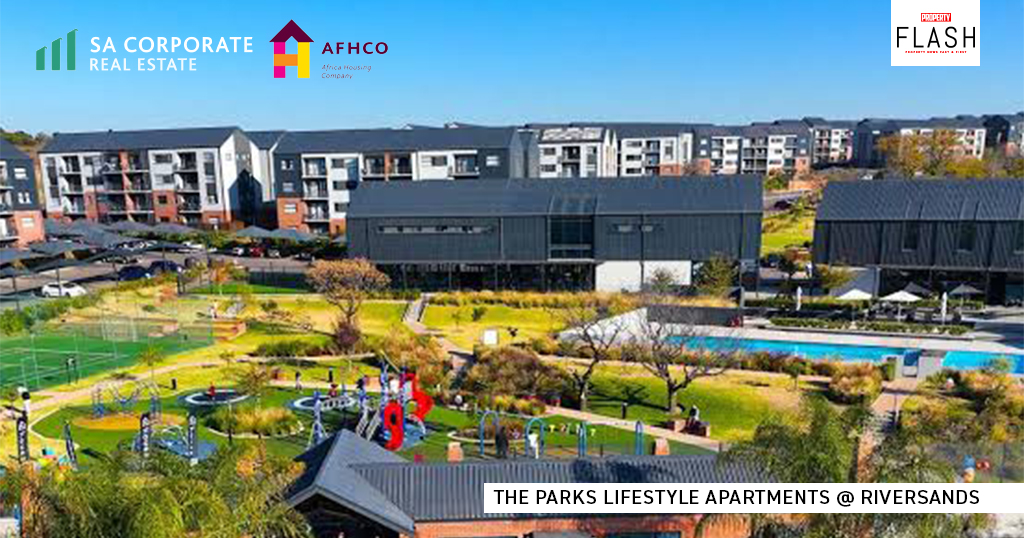
SA Corporate Real Estate (JSE: SAC) made its biggest single residential bet yet. Its R1.67bn purchase of the Parks Lifestyle Apartments at Riversands, Gauteng adds roughly 2,000 rental units in one stroke, pushes residential to about half the fund’s assets, and is forecast to lift distributable income per share by more than 1.5%.
For a real estate investment trust (Reit) that was once best known for convenience retail and industrial boxes, the deal marks a clear turning point. SA Corporate is no longer dabbling in rental housing through its Afhco subsidiary. It is building a residential platform of real scale, and Riversands is the asset that gets it there.
CEO Rory Mackey said the fund recognised that SA faces a housing shortage and that highly quality residential assets including multi-family complexes offered better prospects for the fund than offices and retail centres arguably did. SA Corporate also has experience with investing in housing through Afhco..
The deal was announced via the JSE’s SENS on 10 October 2025. On 1 December 2025 the company confirmed that all conditions precedent had been met, including competition approval and the funder consents. The competition authorities signed off unconditionally on 17 November 2025, and the deal was set to close on 1 December 2025, so the estate contributes to earnings from the start of the 2026 financial year. SA Corporate now sits with more than R20bn in assets. The group not too long ago acquired Indluplace Properties, which showed it is serious about investing in housing.
Mackey is also set to stay in his role until December 2028, giving the group time to find a successor.
Here is what SA Corporate bought, what it paid, and how the transaction has reshaped the fund.
The deal in numbers
SA Corporate bought the Parks through Afhco Holdings, its residential arm. Afhco acquired all the shares and claims in Riversands Residential Apartments (Pty) Ltd, the company that owns 100% of the estate. The sellers were two Century Property Group entities, CH Development Investments and Century Property Developments, ultimately owned by the MAC Trust.
| Item | Detail |
|---|---|
| Purchase consideration | R1,671m (excl. costs) |
| Phase 1 (paid upfront) | R1,640m for 1,960 units, 118,528m² GLA |
| Phase 2 (deferred) | Up to R31m for a new 40-unit block |
| Value per unit | About R836,000 (Phase 1) |
| Average rental | R8,125 per unit per month (R131/m²) |
| Forecast year-one NOI | R159.6m |
| Forecast first-year net property income yield | 9.55% |
| Forecast distributable profit (2026) | R80.5m |
| Funding assumption | 57% loan-to-value |
| Accretion to distributable income per share | More than 1.5% within 12 months |
The structure protected SA Corporate with respect to the unfinished part of the estate. Century is still building the 40-unit Phase 2 block, and up to R31m of the price is only paid as construction milestones are hit. Century also guarantees R316,667 a month of net operating income on that block for the first 12 months after closing, about R3.8 million in total.
The new debt is cheap by local standards. SA Corporate said the three-year Afhco facility would be priced at 125 basis points over three-month JIBAR, raised as funding for socially responsible investment in affordable housing. The balance comes from existing facilities, disposal proceeds and, if needed, equity.
At R1.67bn the transaction was a category 2 deal under JSE rules, so no shareholder vote was required.
Why Riversands?
Riversands is one of Johannesburg’s fastest-growing nodes, sitting on the northern edge of Fourways near Steyn City and Dainfern. It offers what middle-income renters increasingly want: security, space and short commutes to the employment hubs of the north.
The Parks is a lifestyle estate rather than an apartment block. Its 1,960 completed units are a mix of bachelor, one-, two- and three-bedroom apartments in three-storey walk-ups. The amenity list reads more like a resort than a rental:
- a clubhouse, pool, gym, restaurant, cinema, games room and executive lounges
- walking paths, kids’ play parks and sports fields
- an on-site nursery school, with a private primary school next door
- a water park with super-tubes and a beach area
Those features matter for the numbers. Amenities drive tenant retention, and retention drives occupancy. SA Corporate told the market the estate delivers strong occupancy and stable cash flows because it combines affordability, lifestyle and a supply-constrained location.
The estate also carries a green tag. All 1,960 units hold EDGE certification, 1,432 of them at the Advanced level, with energy savings of up to 46% and water savings of up to 23%. For an investor base that increasingly screens on ESG, that is a useful selling point.
The company was candid that it had nothing like this in its book. By its own admission, it did not own or manage any property with the Parks’ scale or mixed-use potential. It is a stellar housing deal for SA Corporate.
How the Parks reshaped the residential book
Riversands is the latest step in a residential build-out that started when SA Corporate bought Afhco in 2014. Afhco brought an inner-city Johannesburg portfolio of roughly 10,000 units, including student beds. The 2023 takeover of Indluplace added another 9,189 units and almost doubled the book.
But scale was only half the story. The inner-city stock came with urban management headaches, and management has spent the past three years selling non-core high-rise buildings and individual apartments. The Parks swings the mix decisively towards the suburbs.
| Measure | Before the Parks | After the Parks |
|---|---|---|
| Residential share of SA property assets | 41% (June 2024) | About 49% (June 2026) |
| Suburban estates’ share of residential book | 58.7% | About 65% |
| Residential portfolio value | About R7bn | R8.4bn (June 2026) |
| Housing units (incl. student beds) | About 18,000 | Nearly 20,000 |
In its June 2026 interim results, SA Corporate described itself as the listed sector’s largest owner of residential rental property in South Africa. Residential is now its single biggest segment, ahead of retail and industrial.
The suburban tilt is paying off. Suburban assets averaged just 2.8% vacancy in the first half of 2026, against 4.1% in the inner city.
Mackey’s plan is to grow the fund’s residential exposure beyond R10bn, which could pave the way for a separate listing of the housing business. This would be before he leaves his CEO role.
What it did to the numbers
The first full half-year with the Parks on board shows up clearly in SA Corporate’s interim results to 30 June 2026. Distributions grew 7%, and residential was the engine.
| Metric | H1 2025 | H1 2026 | Change |
|---|---|---|---|
| Distribution per share | 13.01c | 13.92c | +7.0% |
| Distributable income per share | 14.07c | 15.05c | +7.0% |
| Group net property income | R756.6m | R802.0m | +6.0% |
| Residential net property income | about R316m | R352.9m | +11.6% |
| Residential rental income | about R553m | R584.1m | +5.7% |
| SA REIT NAV per share | 429c | 423c | -1.4% |
| SA REIT LTV | 40.4% | 40.5% | Flat |
Source: SA Corporate interim results, 17 September 2026.
Residential NPI jumped 11.6%, far ahead of retail at 1.2% and industrial at 2.8%. Management credited group NPI growth partly to a full six months’ contribution from the Parks, alongside rental escalations and better occupancy.
The balance sheet absorbed the deal comfortably. SA Corporate funded part of the price with a vendor consideration placing of 143.3-million new shares at 314 cents in November 2025, raising roughly R450m. The rest came from debt, which pushed borrowings up temporarily.
Disposals then did the heavy lifting. As much as R531m of debt was repaid in the first half from asset sales, including Bluff Towers Shopping Centre, and the LTV fell from 42.1% at December 2025 to 40.5% by June. NAV per share recovered from 415 cents at year-end to 423 cents. The LTV level will please investors who tend to not want LTV to exceed 40%.
The Parks also strengthens a quieter profit lever: selling apartments into the retail market. In the first half, 398 units transferred at an average 27% premium to book value. The company argued at the outset that owning a top-quality estate like the Parks lets it sell weaker units elsewhere at sub-8.5% yields while buying at 9.55%.
For the full 2026 year to end-December, SA Corporate is guiding distributable income per share growth of 5% to 7%.
The bigger picture for SA Reits
SA Corporate’s residential pivot is happening against a much healthier backdrop for listed property. According to the SA REIT Association, rolling 12-month sector distribution growth hit 10.58% at the end of June 2026, a fifth straight quarter of inflation-beating payouts. SA Corporate’s AFHCO platform was singled out as the standout in its pre-close update.
The structural case for rental housing is also strong. South Africa’s housing backlog keeps growing as urbanisation continues, and many middle-income households cannot afford to buy. Globally, residential is the largest real estate asset class. Mackey pointed to MSCI data showing residential returned 6.1% a year over the decade to December 2024, second only to industrial.
Yet, only a handful of JSE REITs offer meaningful residential exposure. With Indluplace absorbed, SA Corporate is the largest listed player by a distance, and the Parks makes that lead harder to close.
The deal is not risk-free, and investors should keep an eye on four things. Bear in mind that SA Corporate’s team is skilled and experienced.
- Interest rates. The Reserve Bank raised the repo rate by 25 basis points to 7% in May 2026 and then again by another 25 basis points to 7.25% in September 2026 as oil-driven inflation picked up. The Parks was underwritten at a 57% LTV, so higher JIBAR eats directly into its forecast R80.5m distributable profit.
- Concentration. At R1.67bn, one estate now carries a meaningful slice of the residential book. Any local oversupply in Riversands or Fourways would be felt quickly. However, the demand as the estate is healthy.
- Tenant affordability. Fuel-driven inflation hit a two-year high of 5% in June 2026. Middle-income renters on month-to-month leases are sensitive to that squeeze.
- Phase 2 delivery. The 40-unit block is the developer’s risk until completion, but delays would defer income and the NOI guarantee only runs for 12 months.
None of these looks like a deal-breaker today. Vacancies are low, and the price-to-income maths still works at the current cost of debt.
The Property Flash take
The Riversands deal is the clearest signal yet that SA Corporate wants to be judged as a residential Reit with a retail and logistics tail, not the other way round. It bought a modern, amenity-rich estate at a 9.55% yield, funded it sensibly, and has already banked a 7% lift in distributions with the Parks contributing. This is a smart strategy by the talented, hard-working and trusted SA Corporate Real Estate management team
The fund is not done shopping. Management says due diligence is complete on two more income-producing suburban estate portfolios, and a greenfield development is under evaluation. Any deal will depend on funding at the right cost of capital. When these deals land, the R10bn residential target, and a possible stand-alone listing, come into view. For investors wanting exposure to South Africa’s rental housing shortage through the JSE, SA Corporate is increasingly the obvious ticket.
alistair@propertyflash.co.za
Partner content for SA Corporate Real Estate
