
October 7 2026 15:25
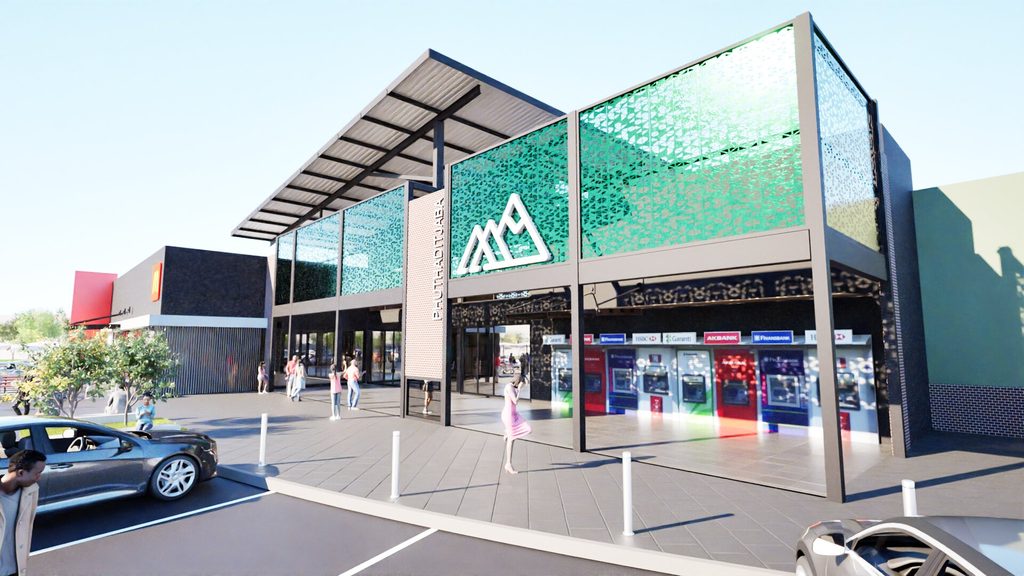
A proposed Phuthaditjhaba shopping centre
South Africa
Safari Investments, the retail property group controlled by Heriot Reit, is back in the business of building shopping centres. It is developing sizeable regional community centres in areas where shoppers are plentiful and good-quality formal retail space is in short supply.
In Pretoria West, Safari is developing Westville Gardens Shopping Centre, a 28 000m² centre on WF Nkomo Drive. In Phuthaditjhaba in the Free State, it has secured land for a centre of up to 30 000m² of gross lettable area (GLA). Both will be anchored by a leading national food retailer, with talks under way with Shoprite, Boxer and Spar, and around 90% of each centre is expected to be let to national retailers.
“Both centres follow Safari’s proven retail model, focusing on dominant nodes within strong, established mass-market catchments,” said Safari CEO Dirk Engelbrecht.
The two projects mark a new chapter for Safari. The group made its name in the 1990s and 2000s by pioneering shopping centres in Mamelodi, Atteridgeville and Sebokeng, at a time when many banks and national retailers were wary of township retail. Under the chairmanship of Heriot founder Steven Herring, Safari is performing well with its developments in key South African nodes.
Westville Gardens: a centre on a busy commuter artery
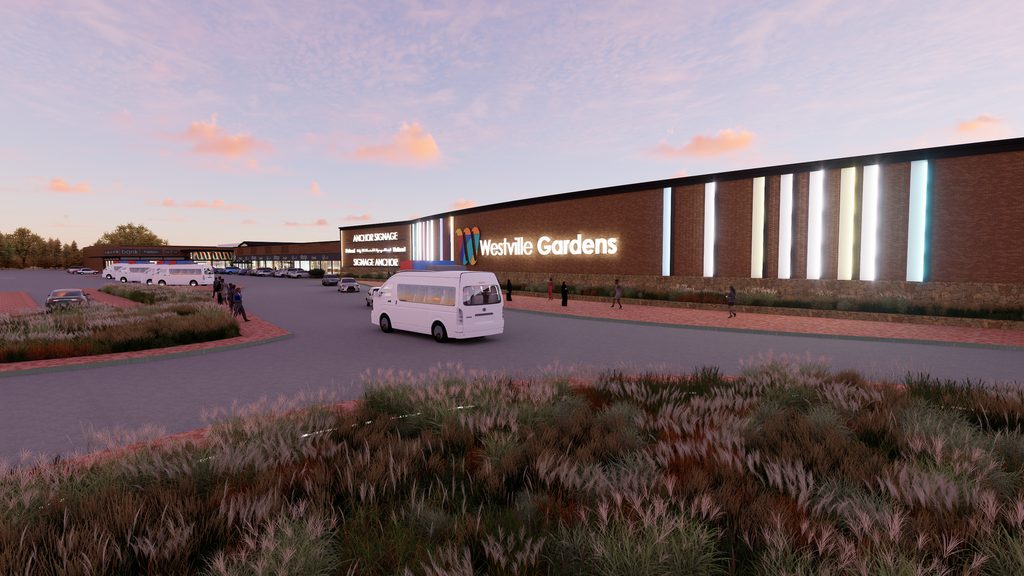
Westville Gardens shopping centre
Westville Gardens sits on WF Nkomo Drive, one of the main routes linking Pretoria’s western suburbs and townships with the Pretoria CBD. The centre will serve the fast-growing residential nodes of Atteridgeville, Kwaggasrand, Lotus Gardens, Elandspoort and Danville, all of which have easy access to the site.
Engelbrecht said the centre will attract a mix of local residents and daily commuters. Thousands of people pass the site every day on their way to and from work in the city. This passing trade comes on top of strong, ongoing residential densification in the surrounding suburbs.
A centre on a commuter’s route home is well placed to capture everyday spending. Shoppers can buy groceries, pay accounts, collect medication or grab a meal without making a separate trip. For people who rely on minibus taxis, that convenience saves both time and money.
Safari knows this part of Tshwane better than almost any other landlord. It already owns three shopping centres in the area, including Atlyn Shopping Centre and Nkomo Village in Atteridgeville, which have GLAs of around 31 000m² and 23 000m² respectively.
“In Pretoria West, Safari has deep market knowledge, supported by three existing shopping centres in the area that are trading exceptionally well. This track record, combined with strong relationships with local stakeholders and clear evidence of sustained residential growth, provides confidence in the node’s continued expansion,” said Engelbrecht.
The retail centre forms part of a wider Westville Gardens precinct. Safari has secured the land in a joint venture with its owner for a mixed-use retail and residential development, and the cost of the first phase was estimated at R650m in the group’s 2025 integrated report.
Phuthaditjhaba: meeting pent-up demand in an overtraded node
Phuthaditjhaba, in the foothills of the Maluti Mountains in the eastern Free State, is the commercial heart of the former QwaQwa area. Its shops serve not only the town’s residents but also a wide ring of surrounding villages and rural communities, many of whose residents travel long distances to buy groceries and clothing and to do their banking.
Safari’s site is on a key arterial route into the town’s main retail hub, which gives it strong accessibility and visibility. The land allows for a development of up to 30 000m² of GLA. When the project was first outlined in 2025, a centre of about 24 100m² was estimated to cost around R400m.
Engelbrecht said the retail node is overtraded and that the new development will help to meet an evident undersupply of formal retail in the area.
“The opportunity originated through a local development partner who secured the site. The scale of the catchment, combined with clear signs of retail overtrading and strong demand from national tenants looking to expand, made this a compelling investment opportunity,” he said.
The partnership model matters. A local developer brings knowledge of the community, the landowners and the municipal process, while Safari brings capital, leasing relationships with national retailers and decades of experience in running mass-market centres.
Why trading densities tell the story
Trading density, a retailer’s annual turnover per square metre of shop space, is one of the clearest measures of whether a shopping centre works. High densities mean retailers are making money from their space. Those retailers can afford their rentals, renew their leases and often want to expand.
Safari’s existing portfolio has a strong track record on this measure. Independent research house Edison Investment Research put the portfolio’s weighted annual trading density at about R40 900/m², a healthy figure for centres serving lower- to middle-income shoppers.
When a retail node is overtraded, as Engelbrecht said Phuthaditjhaba is, the existing shops are turning over far more per square metre than they were designed for. Shoppers queue at tills, aisles are crowded and stores run out of stock. Retailers want more space, but there is nowhere for them to go. The demand is real, and it is not being met.
A new, well-located centre absorbs that pent-up demand. It gives national retailers the space they have been asking for and spreads spending across a larger, better-designed footprint. National tenants are keen to expand into the town, which reduces leasing risk for Safari.
The nature of the spending also supports strong densities. Safari’s centres serve predominantly lower- to middle-LSM shoppers whose spending is weighted towards food, groceries, airtime, basic clothing and household goods. These are needs-based purchases that people make every week, regardless of the economic cycle. Safari’s convenience-led centres in mainly peri-urban areas proved resilient during the Covid-19 lockdowns for exactly this reason.
Dominance matters too. A centre that is the main destination in its node, rather than one of several competing malls, keeps more of the local spend within its walls.
A tenant mix built around everyday needs
Both centres fall into the regional community centre category. They are larger than typical convenience centres, which allows Safari to offer a comprehensive retail mix and create a true one-stop shopping destination.
That matters most for shoppers who depend on public transport. Someone who pays a taxi fare to reach a centre wants to buy groceries, clothes, school shoes and a cellphone, visit the bank and pharmacy, and grab a bite to eat in one trip. The more of those needs a centre meets, the more of the household budget it captures.
“The offering will be highly consistent with the broader Safari portfolio, with approximately 90% national retailer representation anchored by a Shoprite, Boxer or Spar with a conveniently located taxi rank,” said Engelbrecht.
“We are currently engaging with leading national food retailers including Shoprite, Boxer and Spar. Discussions are ongoing and subject to final approvals, but these brands have a strong track record in similar markets and are well suited to anchor both developments,” he said.
The food anchor is the engine of a mass-market centre. Shoppers visit for groceries several times a week, and that footfall feeds the line shops around them. Herring has described Shoprite as the standout performer in Safari’s food segment.
A high proportion of national tenants also underpins the investment case. National retailers sign longer leases and carry stronger covenants than independent traders, which makes income more secure and the asset easier to value and fund. Across Safari’s existing portfolio, national tenants occupied 91% of GLA and vacancy was just 2.06% at the end of June 2025.
The taxi rank is no afterthought. Herring has long argued that giving a community what it needs builds trust and footfall.
“We recognised that these communities are our customers. So, if they wanted a taxi rank, we gave them one for free and then these people would use our nearby mall,” Herring told Property Flash earlier this year.
Engelbrecht said Safari’s emphasis is on safe, secure and easily accessible shopping environments, whether customers arrive by car, by public transport or on foot, combined with modern, high-quality and community-oriented retail destinations.
How Heriot and Safari complement each other
The two developments are a product of a partnership that has strengthened steadily since Heriot made its offer for Safari in 2022. Heriot built up a controlling stake over the following year, and Herring chairs both companies.
Each side brings something the other needs. Heriot brings a development pedigree. Herring founded Heriot in 1998, and from 2003 his team built more than 20 shopping centres in CBDs, rural areas and townships, among them Tembisa, Tsakane, Siyabuswa and Burgersfort. It brings a strong balance sheet, relationships with funders and a community-first approach to development. That approach includes employing and upskilling local labour, building taxi ranks and bringing informal traders into formal shops.
“Retail is all about trading densities. We focus on building or buying malls with the highest trading densities. Recent purchases include Checkers Hypermarkets at 14th Avenue, Roodepoort, Heidelberg Mall in Somerset West and Sun Valley in Noordhoek,” Herring said.
Safari brings a young, Pretoria-based management team led by Engelbrecht, a portfolio of dominant centres in Tshwane’s townships, and long-standing relationships with the national retailers and communities in those areas.
The results of this combination show in Safari’s numbers. In the year to June 2025, the value of its investment properties rose 3.74% to R4.19bn, its loan-to-value ratio fell to 31.5% from 33%, and its net asset value per share improved to R11.47 from about R10.01. It sold its Namibian centre, Platz am Meer to focus on South Africa.
With its operations in good shape, Safari turned to growth.
“Looking ahead, the board is considering a strategic shift in direction. Our young team is eager to return to shopping centre development, which will require access to capital,” Herring said in the company’s 2025 integrated report.
That capital question was answered within the group. In October 2025, Safari’s board proposed buying out minority shareholders at R8 a share and delisting the company from the JSE. At the time, the Heriot group already held about 59% of Safari. The board cited the illiquidity of the shares, the cost of a separate listing and Safari’s plan to adopt a development-focused strategy.
The structure makes sense. Development takes patient capital, and centres take years to plan, build and let up. With Heriot’s backing, Safari can pursue these projects without the pressure of paying out almost all of its income as dividends each year.
A growing pipeline, with quality over quantity
Westville Gardens and Phuthaditjhaba are not the only projects on Safari’s books. The group is also working on:
- a convenience centre of about 8 000m² in Lynnwood, Pretoria, anchored by Checkers
- a potential 20 000m² retail centre in a township north of Pretoria
- a future mixed-use retail and residential development in Mamelodi, which is in the township establishment and rezoning phase
“Our strategy is opportunity-driven, with a strong focus on delivering high-quality assets that align with our investment philosophy. The emphasis is firmly on quality over quantity, ensuring long-term value creation across the portfolio,” said Engelbrecht.
That discipline has served Safari well for more than two decades. Its centres have been built where people live and need them, and they have been let mainly to national retailers that trade strongly. The two new centres will bring jobs during construction and operation, and they will give hundreds of thousands of shoppers in Pretoria West and the eastern Free State access to modern, safe and convenient retail on their doorstep.
“I want Safari to grow its portfolio in under-serviced areas across our country. There are still so many opportunities for rural retail development across South Africa,” Herring said.
With Westville Gardens and Phuthaditjhaba, Safari and Heriot are putting that ambition into bricks and mortar.
Partner content for Heriot Reit
Learn more about Heriot Reit here: https://propertyflash.co.za/2026/10/04/heriot-reit-achieves-third-consecutive-record-year/
and check out our episode of the Another Brick in the Wall podcast featuring Grant Elliott here: https://propertyflash.co.za/2026/04/14/another-brick-in-the-wall-the-reit-report-episode-3-why-sa-leads-the-world/
