
October 8 2026 15:45
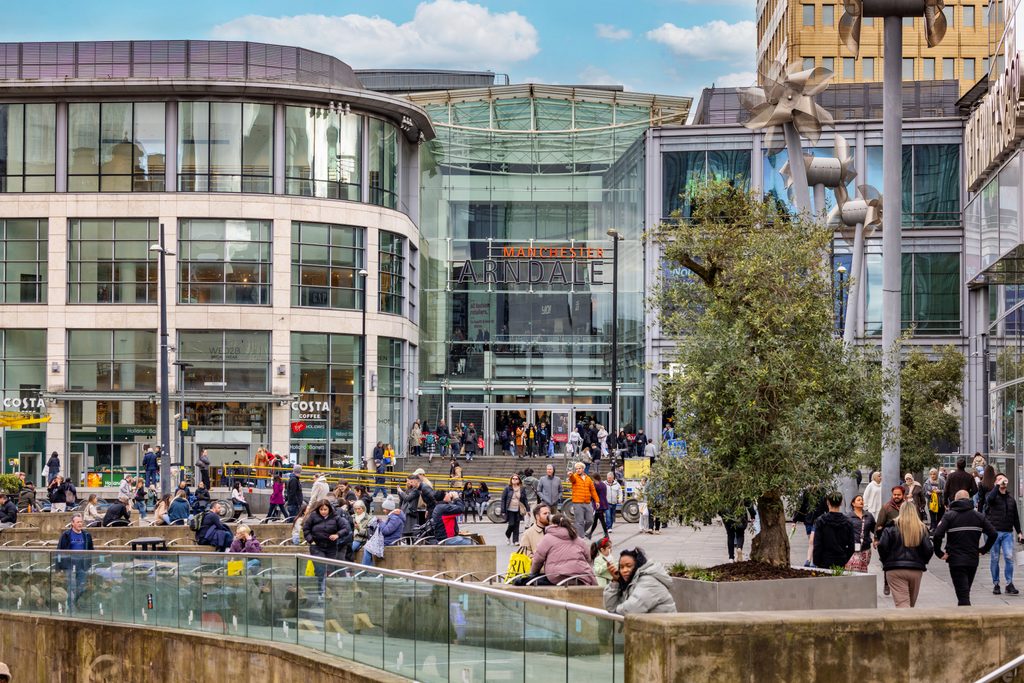
Manchester Arndale Shopping Centre
LONDON AND JOHANNESBURG, UNITED KINGDOM
Hammerson, the JSE- and London-listed owner of some of the UK, Ireland and France’s best-known large shopping destinations, is heading into the end of 2026 and into 2027 with its strongest earnings momentum in years and a clear change of gear.
After a five-year turnaround spent selling non-core assets, cleaning up its balance sheet and buying out joint-venture partners, the group has now made its first external acquisition in more than a decade: a 50% stake in Manchester Arndale, and set out new medium-term growth targets that run through 2027 and beyond.
“Hammerson’s strategy is now naturally broadening to external acquisitions,” chief executive Rob Wilkinson said when the group released its results for the six months to 30 June 2026. This week, at a media briefing in Johannesburg, he repeated that the company was in a position to make acquisitions compared with when it was working through the pandemic and other challenges to the UK and European economies.
For South African investors who hold the stock through its JSE secondary listing, the message is that the company is moving from repair to growth and that dividends are rising in step.
Guidance raised for 2026
Hammerson now expects European Public Real Estate Association (EPRA) earnings of about £132m for 2026, roughly 27% higher than in 2025. That comprises about £125m from the existing business, up from previous guidance of about £120m, plus a £7m contribution from the Arndale.
Total net rental income is expected to grow by about 28% in 2026, with 25% coming from the underlying business and 3% from the Arndale deal.
The first-half numbers gave the board the confidence to lift its outlook. Net rental income rose 40% to £112m, mainly thanks to the joint-venture stakes it bought in 2025, while like-for-like net rental income grew about 5%. EPRA earnings rose 33% to £64m and EPRA earnings per share rose 22% to 12.1p.
The board declared an interim dividend of 9.67p a share, 22% higher than a year earlier. It is payable on 15 October 2026. Hammerson pays out 80% to 85% of its annual EPRA earnings as dividends.
There was some help from one-offs. The group benefited from the favourable resolution of long-running car-park rates appeals in the first half, which will not recur. Even so, management expects its EPRA cost ratio to fall below 30% for the full year, compared with 28.4% in the first half and 38.3% a year earlier.
Valuations were the soft spot. The portfolio was valued at £3.6bn at the end of June, with yields flat and a small net revaluation loss of £9m. IFRS profit fell 29% to £56m as a result. EPRA net tangible assets were unchanged at £3.94 a share. But management told the media it expected some valuation uplift in the second half.
Manchester Arndale: the start of external growth
The headline move of 2026 is the purchase of 50% of Manchester Arndale from Palma Arndale BidCo for a headline price of £218m, reflecting a topped-up net initial yield of 7.8%. The deal completed on 29 July and Hammerson will jointly own and manage the centre with M&G.
Manchester Arndale is one of the UK’s largest city-centre shopping destinations. It attracts about 45-million visitors a year and serves a catchment of 6.4-million people, which Hammerson says is the largest retail catchment outside London.
The group expected the acquisition to add to earnings per share from day one. It sees scope to use its leasing, commercialisation and asset management platform to grow income at the centre, noting the strong overlap between the Arndale’s tenants and brands already in its portfolio.
To fund the deal, Hammerson raised about £189m through an accelerated bookbuild, placing 52.1 million new shares at 355p each, the equivalent of about R78.81 a share which was at a 3.8% discount to the previous closing price. A separate retail offer ran alongside the institutional placing.
On a pro forma basis, after the equity raise and the post-period sale of Dublin Central, the group’s loan-to-value ratio falls to about 36% from 39%, and net debt to EBITDA improves to about 7x from 8.1x.
More deals likely
The Arndale is unlikely to be the last acquisition. Having completed five joint-venture buyouts in the UK and Ireland since November 2024 whihc included Brent Cross, Bullring and Grand Central, The Oracle and, in May this year, the remaining 50% of Ilac in Dublin, Hammerson has had its focus has naturally turned outwards.
It is targeting retail-led destinations in cities with strong economic fundamentals and growing catchments. The company says there is a well-signposted pipeline of assets coming to market in the UK. France remains a strong home market, and it is open to select other European markets with attractive demographics, transparency and liquidity.
The group says the quality of the catchment matters more than size alone, so smaller centres could also fit if they complement the existing portfolio and share tenants with it. On the results call, Wilkinson estimated Hammerson would have about £200m of additional capacity for deals while staying within comfortable credit metrics.
Acquisitions will be funded through a mix of debt, equity and recycling capital from strategic land. The group has committed to keeping its investment-grade credit rating through the cycle. Fitch rates Hammerson BBB+, while Moody’s rates its long-term debt Baa2 with a positive outlook.
Leasing pipeline for the second half
Hammerson’s 11 flagship destinations attract more than 215-million visitors a year and generate more than £3bn in sales. They include Bullring and Grand Central in Birmingham, Brent Cross in London, Cabot Circus in Bristol, Westquay in Southampton and The Oracle in Reading, as well as Dundrum in Dublin and Les 3 Fontaines and Les Terrasses du Port in France.
The first half was strong operationally. Footfall rose 3%, ahead of national benchmarks in all three countries, and like-for-like sales rose 2%. Hammerson signed 234 leases worth £18.5m in headline rent, with long-term retail deals signed 52% above previous passing rent and 9% above estimated rental value. Flagship occupancy reached 96%, the highest first-half level in seven years.
Since the end of June, the group has signed a further £2.6m of headline rent, including a major renewal with Next at Westquay, while Sephora is joining Brent Cross. It has a leasing pipeline of more than £20m for the second half.
Several new brands are set to open before the end of 2026. Canadian fashion brand Garage and Australian jeweller Harli + Harpa have signed for Bullring, and Zara Home will open at Dundrum which will be its first store in Ireland.
Other second-half initiatives include:
- A premium parking offer, following a 12% like-for-like rise in car park income to £17m in the first half
- Progress on options for the remaining vacant department store at The Oracle, after the first was successfully re-let to a flagship Zara in April
- The full lease-up of The Ironworks residential scheme at Dundrum, which was already 80% let and will add about €1.5m of annual net rental income at Hammerson’s share once full
Projects lined up for 2027
Looking further ahead, a number of projects are due to deliver in 2027.
In France, the 10,200m² Cergy 3 extension at Les 3 Fontaines is fully pre-let to Primark and Nike, with handover expected in late 2026 and opening in the second quarter of 2027. It will add about €2.5m of annual net rental income, a yield on cost of around 7%. Hammerson is also negotiating with several brands to coincide with the opening, and has applied for planning to reposition the large store vacated by C&A.
In Ireland, a redesigned and re-anchored food court at Dundrum is targeted for completion in 2027.
In the UK, Hammerson has applied for planning for a significant upgrade of the southern facade at Brent Cross, which celebrates 50 years of trading this year. It also secured consent for a new entrance and a showcase digital screen at Westquay, and has started public realm works at Quakers Exchange at Cabot Circus.
At Les Terrasses du Port in Marseille, plans are being advanced for terrace pergolas to boost winter and evening trade at the restaurants.
Unlocking strategic land
Hammerson has about 60 acres of strategic land in the UK and Ireland, which it sees as a significant source of value and capital for recycling.
So far this year it has sold £75m of non-core land at a substantial premium to book value, including the final Leeds Eastgate disposal in February and the partial sale of Dublin Central in July. The remaining land is held at a book value of £291m.
The group splits this land into two categories. Integral sites, on or next to its flagship destinations, could add new uses such as residential and offices; here Hammerson will either invest itself or keep control while bringing in partners. Standalone sites will be taken through planning and other capital-light milestones before being sold, partly sold or placed into joint ventures.
Key projects include:
- The Drum, Birmingham – Hammerson has committed initial capital to designing and procuring an office-led conversion of the former department store at Grand Central
- Martineau Galleries, Birmingham – strip-out and preparatory works have begun after the site was vacated in March 2026
- Cabot Gate, Bristol – a student-led scheme next to Cabot Circus received a resolution to grant planning consent
- Brent Cross and Dundrum Village – options are being reviewed for these significant landholdings
Refinancing ahead of 2027
The biggest balance sheet item on the 2027 calendar is the maturity of Hammerson’s €700m 1.75% eurobond in June 2027, carried at about £601m.
The group has prepared for it. Liquidity was £1.1bn at the end of June, made up of £613m of undrawn revolving credit facilities and £500m of cash. In April it refinanced £463m of credit facilities and extended a further £150m, so that all £613m now runs to April 2029. In June it issued a €350m bond maturing in 2031 at a 3.875% coupon, which was more than five times covered at its peak.
Hammerson also met both emissions targets attached to the 2027 sustainability-linked bond, so its coupon will not step up in the final year.
Refinancing at today’s rates will cost more than the 1.75% coupon on the maturing bond, which is worth watching for 2027 earnings, but management’s guidance already takes its financing plans into account.
The medium-term targets
The new medium-term guidance, measured off a 2025 base, targets:
- EPRA earnings per share growth of 6% to 8% a year
- Dividend per share growth of 6% to 8% a year
- A total accounting return of about 10% a year
On the results call, the outgoing CFO said Hammerson sees potential for like-for-like growth of roughly 4% to 5% in 2027. The company has also guided to a further three to four percentage point reduction in its EPRA cost ratio in 2027, as additional acquisitions require little extra overhead and operating leverage increases.
Leadership changes
The growth phase comes under new leadership. Rob Wilkinson now leads the group, following the retirement of Rita-Rose Gagné, who joined in November 2020 and drove the turnaround. Long-serving CFO Himanshu Raja has stepped down after the half-year results. Gina Szymanski is the new CFO.
What it means for SA investors
Hammerson remains one of the prominent large offshore retail property counters on the JSE. Its results show that well-located, dominant city-centre shopping destinations are still attracting the best retailers, who are consolidating into fewer, larger stores in the strongest locations.
The risks are familiar ones such as a weaker UK or European consumer, valuation pressure if bond yields rise, and execution risk on acquisitions and development. Hammerson rates macroeconomic and geopolitical risk as its highest residual risk.
But with earnings guidance raised, a dividend growing by more than 20%, a clear acquisition strategy and a well-funded balance sheet, the group enters 2027 in its strongest position in years.
This is not meant to constitute financial advice.
alistair@propertyflash.co.za
