
November 6 2026 14:22
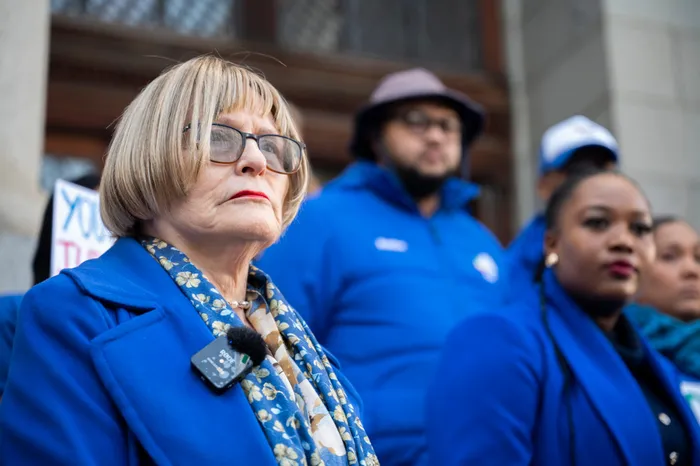
Picture: Armand Hough / Independent Newspapers
South Africa’s 2026 local government elections have broken the country’s municipal map into pieces. With most votes counted, the ANC remains the largest party nationally but is polling just under 32%. That is well below the 40% it took in the 2024 general election, and its weakest result at the ballot box since 1994. In Gauteng, it is not leading in a single metro. This is according to research by Property Flash.
The Democratic Alliance (DA) is ahead in Johannesburg, Tshwane, Ekurhuleni and Nelson Mandela Bay, and has comfortably held Cape Town. Jacob Zuma’s uMkhonto weSizwe (MK) Party leads in eThekwini. ActionSA has become a serious force in Tshwane. And across the country, hung councils are piling up faster than outright wins.
All figures in this report are provisional, taken from the Electoral Commission of South Africa (IEC) results feed and media tallies as of Friday, 6 November. The IEC has said it will declare the official results on Sunday, 8 November. After that, the real contest begins: the coalition talks that will decide who actually runs South Africa’s towns and cities.
Voters went to the polls on Wednesday, 4 November, in the country’s seventh democratic local elections, with special votes cast on 2 and 3 November. More than 300 parties contested, alongside independent candidates.
By 08:33 on Friday, with 71% of votes counted, the ANC had about 6.19 million votes, the DA about 4.76 million and MK about 1.78 million. With roughly 83% of voting districts in later on Friday, the proportional representation (PR) ballot stood at ANC 31.9%, DA 24.2% and MK 9.3%.
The gap between the two biggest parties has widened as the count has moved from cities to the countryside. Early on Thursday, when urban stations reported first, the DA sat within a few points of the ANC. As results arrived from the Eastern Cape, Limpopo and rural KwaZulu-Natal, the ANC pulled ahead.
The provincial pattern is familiar but sharper than before:
- ANC leads in the Eastern Cape (about 45%), Limpopo (about 54%), Mpumalanga, North West, the Free State and the Northern Cape.
- DA leads in the Western Cape and Gauteng (about 34%).
- MK leads in KwaZulu-Natal (about 34%).
Turnout has recovered from the record low of 2021. The IEC reported that more than 15.9-million people took part, including special voters, out of 29.2-million registered. The Mail & Guardian put the preliminary turnout at about 54.5%, while the IEC’s figure on counted districts was about 51%. Either way, it is up from 45.9% in 2021, when about 12-million people voted. Analysts linked part of the rise to suburban frustration with service delivery, though youth participation remained weak.
IEC chairperson Mosotho Moepya described polling day as largely trouble-free. The security cluster, NatJoints, said the elections were largely peaceful despite isolated incidents.
Gauteng: the DA ahead, ActionSA rising, the ANC squeezed
The biggest shift is in Gauteng, the economic heartland, where the ANC has fallen to third place in parts of all three metros.
In Johannesburg, the DA is running at about 40%. By Friday morning, with 46% of votes counted, it had 476,905 votes against the ANC’s 204,885 and ActionSA’s 184,415. The DA campaigned with Helen Zille as its mayoral candidate, and local press have credited her attention-grabbing campaign for the lead.
In Ekurhuleni, the DA also leads, with the ANC and ActionSA roughly level behind it in early tallies.
Tshwane has been the most volatile count. Early on Thursday, ActionSA briefly led with about 28%, just ahead of the ANC. As more districts reported, the DA moved to the front. By Friday morning, with 65% counted, the DA had 367,160 votes, ActionSA 256,981 and the ANC 246,172. That is a striking jump for ActionSA, which won 8.6% in the capital in 2021. The party’s profile has been lifted by Mayor Nasiphi Moya’s time in office.
ActionSA national chairperson Michael Beaumont said the party had flipped 12 former ANC wards in Tshwane, taking all but one ward in Atteridgeville. Political analyst Tara Roos said the ANC was shedding votes in Johannesburg to ActionSA, the DA and the SACP, which contested separately this year. She called the ANC’s failure to lead in any Gauteng metro shocking.
KwaZulu-Natal: MK’s eThekwini breakthrough
In KwaZulu-Natal, the story belongs to MK. Formed only in late 2023, the party is contesting its first local elections and has taken a commanding lead in eThekwini, the Durban metro.
By Friday morning, with 39% of eThekwini’s votes counted, MK had 315,572 votes, the DA 154,317 and the ANC 123,898. Later tallies put MK near 43%, with the DA on about 21%, the ANC on about 17% and the IFP on about 9%. In 2021, eThekwini was a hung council in which the ANC was the biggest party. It has now slipped to third place in the city.
Zuma returned to the campaign trail after a hospital stay to declare MK ready to govern, and the party now leads across the province with about 34%. Even so, MK looks set to fall short of a majority in eThekwini, so it will need partners to take the mayoralty.
KwaZulu-Natal recorded a turnout of 48.7% by Thursday, according to the provincial IEC. Before the vote, police had flagged 165 high-risk voting stations in the province, 124 of them in eThekwini, and deployed extra security there.
Cape Town, the Western Cape and the rest of the country
Cape Town is the one metro where nobody needs a calculator. The DA won 58.3% there in 2021 and is on course to beat that, with more than 60% of the vote; the ANC is a distant second at about 10%. The DA also wrapped up Swartland, Berg River, Drakenstein and Hessequa early in the count.
The rest of the Western Cape is messier. Midway through counting, 13 of the province’s 25 councils were hung, and the Patriotic Alliance was running third provincially at about 10%.
Elsewhere among the metros:
- Nelson Mandela Bay: the DA leads with about 41% to the ANC’s 27%, short of a majority.
- Buffalo City and Mangaung: the ANC is ahead.
In the Eastern Cape, the ANC remains dominant at about 45% but lost its outright majority in the troubled Makana municipality, home to Makhanda. In the Northern Cape, 17 of 26 councils were hung with 99% of votes counted. Kamiesberg is typical: the ANC won 5 of 11 seats, one short of control.
Nationally, 69 of the first 100 councils to be decided produced no outright winner. With about 83% of districts in, 89 of 132 decided local councils were hung. Among the eight metros, only Cape Town looks set for single-party majority rule.
The coalition season begins
Once the IEC declares the results on Sunday, the action shifts from the ballot box to the negotiating table, and the parties are already setting out their terms.
The ANC is moving cautiously. Secretary-general Fikile Mbalula said on election day that the party was not negotiating with anyone yet, and warned regional leaders not to open their own talks. He said the ANC would name its mayoral candidates within about two weeks of the results. The party’s top officials reportedly met on Wednesday night ahead of a meeting of its national coalitions task team, which Mbalula leads. First deputy secretary-general Nomvula Mokonyane insisted the ANC would not disappear, describing the result as a chance to “repackage”.
ActionSA said talks have already started. Party representative Matthew George said residents of Johannesburg, Tshwane and Ekurhuleni could expect ActionSA at the centre of any coalition in the province. Party president Herman Mashaba said ActionSA would work with any party whose numbers make sense, including the DA, but not if Zille is involved; he has accused her of racism and dishonesty. On the ANC side, Johannesburg regional secretary Sasabona Manganye said the DA would not be the region’s first choice of partner.
The DA goes into Gauteng talks in a strong position, with ActionSA a potential kingmaker in all three metros. In KwaZulu-Natal, the arithmetic around MK in eThekwini will be watched just as closely.
Coalitions have proved fragile in Johannesburg and Tshwane since 2016, with mayors changing repeatedly. For residents, ratepayers and businesses, the result matters less for who “won” than for whether stable administrations emerge to fix water, power, roads and billing. The next few weeks of bargaining will decide that.
247@propertyflash.co.za
