
November 20 2026 11:32
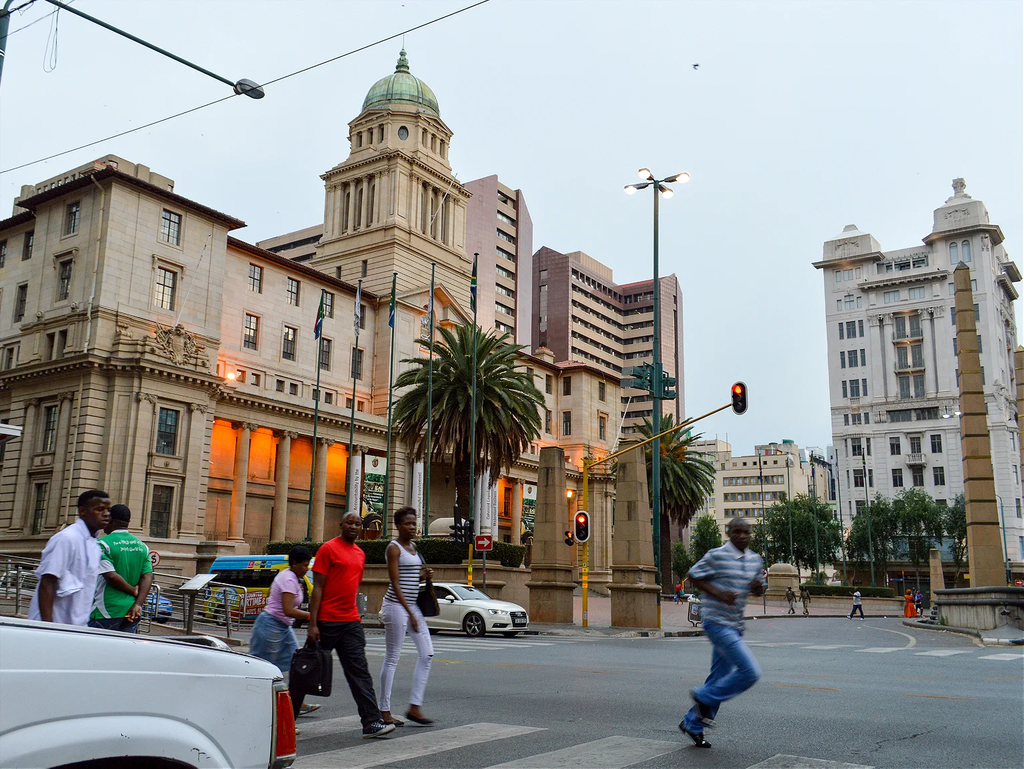
JOHANNESBURG, SOUTH AFRICA
Johannesburg is about to get another coalition government, and many property owners will be asking whether this one can turn the city around or whether it will add to the chaos of the past decade.
The deal isn’t signed yet. An unsigned coalition structure puts ActionSA leader Herman Mashaba in line for the Johannesburg mayoralty and the MK Party in line for deputy mayor, with the council due to hold its first sitting on Monday. The four parties, the ANC, EFF, ActionSA and MK Party, hold 138 seats in the 270-seat council, two more than the 136 needed for a majority.
The DA won the most votes but will probably end up in opposition. It took 35% of the vote, ahead of the ANC on 20% and ActionSA on 16%. It’s problematic for the DA not to have some role in a coalition given its track record elsewhere in SA.
The case for worry
The first problem is the arithmetic. A majority of two seats across four parties leaves almost no room for error. One defection or one fallout between partners could bring down the government. The city has been here before. When Johannesburg elected a new mayor in 2024, it was the seventh in three years.
The second problem is how power would be shared. ActionSA would hold the mayor’s office, but the ANC wants much of the real control. The ANC proposal leaves it with significant control over municipal finances, council oversight and several key service-delivery portfolios. The ANC would control the deputy mayor’s office, which would carry the finance portfolio, as well as the speaker’s chair, roads and transport, and human settlements. It is also seeking to chair the municipal public accounts committee, the council’s main oversight body.
A mayor who doesn’t control the budget, or the committee that is supposed to hold the administration to account, may struggle to push through reforms.
Governance experts are worried. Wits governance expert Professor Alex van den Heever has in numerous publications warned that Johannesburg could face another five years of corruption and poor service delivery if the parties put political interests ahead of service delivery. Civil society groups say coalition government in the city has been shaky so far and has contributed to financial decline and poor service delivery.
The case for hope
The coalition does have a majority, which several previous administrations didn’t. Minority governments that relied on shifting support from smaller parties were behind much of the city’s instability.
Mashaba also knows the job. He was mayor of Johannesburg from 2016 to 2019. His party says the deal must be about fixing the city. ActionSA has maintained that its participation in coalition arrangements must be anchored in service delivery, financial stabilisation and infrastructure renewal. This is even if his record is sketchy and he is a xenophobe.
Experts say coalitions can work if they’re built properly. Local government expert Dr Lungelwa Kaywood told the SABC that written coalition agreements, clear dispute-resolution mechanisms and administrative stability are essential to preventing the political instability that has affected several municipalities. She also said coalition agreements should be made public and should put service delivery ahead of handing out political positions.
What the city needs
Whoever governs faces a huge task. The Centre for Development and Enterprise said Johannesburg needs stable government and a mayor with the political will and ability to carry out fundamental reforms, warning that the city faces what business leaders have called a “national economic emergency”. The CDE also warned that cutting infrastructure investment to cover operating costs would make the crisis worse. iol
Business wants the same thing. Business groups have urged parties to form stable coalitions in the hung metros, warning that instability threatens investment, service delivery and job creation.
What it means for property
For property owners, the test is simple: do the lights stay on and does the water keep running? Power and water failures push up costs for office and retail landlords, who have to run generators and install backup water. They also make homebuyers wary and put off investors, which holds back prices and rentals in a city that should be among the country’s strongest property markets.
Johannesburg isn’t doomed yet. But the coalition will have to prove three things quickly: that the partners can work together without collapsing, that a mayor without control of the finances can still drive reform, and that it can spend money on fixing pipes, substations and roads rather than just keeping the administration running. If it fails on any one of them, the next five years could look much like the last five. i am not holding my breath.
247@propertyflash.co.za
By Alistair Anderson

- Alistair Anderson
- Alistair Anderson
- Alistair Anderson
- Alistair Anderson
- Alistair Anderson
- Alistair Anderson
- Alistair Anderson
- Alistair Anderson
- Alistair Anderson
- Alistair Anderson
- Alistair Anderson
- Alistair Anderson
- Alistair Anderson
- Alistair Anderson
- Alistair Anderson
- Alistair Anderson
- Alistair Anderson
- Alistair Anderson
- Alistair Anderson
- Alistair Anderson
- Alistair Anderson
- Alistair Anderson
- Alistair Anderson
- Alistair Anderson
- Alistair Anderson
- Alistair Anderson
- Alistair Anderson
- Alistair Anderson
- Alistair Anderson
- Alistair Anderson
- Alistair Anderson
- Alistair Anderson
- Alistair Anderson
- Alistair Anderson
- Alistair Anderson
- Alistair Anderson
- Alistair Anderson
- Alistair Anderson
- Alistair Anderson
- Alistair Anderson
- Alistair Anderson
- Alistair Anderson
- Alistair Anderson
- Alistair Anderson
- Alistair Anderson
- Alistair Anderson
- Alistair Anderson
- Alistair Anderson
- Alistair Anderson
- Alistair Anderson
- Alistair Anderson
- Alistair Anderson
- Alistair Anderson
- Alistair Anderson
- Alistair Anderson
- Alistair Anderson
- Alistair Anderson
- Alistair Anderson
- Alistair Anderson
- Alistair Anderson
- Alistair Anderson
- Alistair Anderson
- Alistair Anderson
- Alistair Anderson
- Alistair Anderson
- Alistair Anderson
- Alistair Anderson
- Alistair Anderson
- Alistair Anderson
- Alistair Anderson
- Alistair Anderson
- Alistair Anderson
- Alistair Anderson
- Alistair Anderson
- Alistair Anderson
- Alistair Anderson
- Alistair Anderson
- Alistair Anderson
- Alistair Anderson
- Alistair Anderson
- Alistair Anderson
- Alistair Anderson
- Alistair Anderson
- Alistair Anderson
- Alistair Anderson
- Alistair Anderson
- Alistair Anderson
- Alistair Anderson
- Alistair Anderson
- Alistair Anderson
- Alistair Anderson
- Alistair Anderson
- Alistair Anderson
- Alistair Anderson
- Alistair Anderson
- Alistair Anderson
- Alistair Anderson
- Alistair Anderson
- Alistair Anderson
- Alistair Anderson
- Alistair Anderson
- Alistair Anderson
- Alistair Anderson
- Alistair Anderson
- Alistair Anderson
- Alistair Anderson
- Alistair Anderson
- Alistair Anderson
- Alistair Anderson
- Alistair Anderson
- Alistair Anderson
- Alistair Anderson
- Alistair Anderson
- Alistair Anderson
- Alistair Anderson
- Alistair Anderson
- Alistair Anderson
- Alistair Anderson
- Alistair Anderson
- Alistair Anderson
- Alistair Anderson
- Alistair Anderson
- Alistair Anderson
- Alistair Anderson
- Alistair Anderson
- Alistair Anderson
- Alistair Anderson
- Alistair Anderson
- Alistair Anderson
- Alistair Anderson
- Alistair Anderson
- Alistair Anderson
- Alistair Anderson
- Alistair Anderson
- Alistair Anderson
- Alistair Anderson
- Alistair Anderson
- Alistair Anderson
- Alistair Anderson
- Alistair Anderson
- Alistair Anderson
- Alistair Anderson
- Alistair Anderson
- Alistair Anderson
- Alistair Anderson
- Alistair Anderson
- Alistair Anderson
- Alistair Anderson
- Alistair Anderson
- Alistair Anderson
- Alistair Anderson
- Alistair Anderson
- Alistair Anderson
- Alistair Anderson
- Alistair Anderson
- Alistair Anderson
- Alistair Anderson
- Alistair Anderson
- Alistair Anderson
- Alistair Anderson
- Alistair Anderson
- Alistair Anderson
- Alistair Anderson
- Alistair Anderson
- Alistair Anderson
- Alistair Anderson
- Alistair Anderson
- Alistair Anderson
- Alistair Anderson
- Alistair Anderson
- Alistair Anderson
- Alistair Anderson
- Alistair Anderson
- Alistair Anderson
- Alistair Anderson
- Alistair Anderson
- Alistair Anderson
- Alistair Anderson
- Alistair Anderson
- Alistair Anderson
- Alistair Anderson
- Alistair Anderson
- Alistair Anderson
- Alistair Anderson
- Alistair Anderson
- Alistair Anderson
- Alistair Anderson
- Alistair Anderson
- Alistair Anderson
- Alistair Anderson
- Alistair Anderson
- Alistair Anderson
- Alistair Anderson
- Alistair Anderson
- Alistair Anderson
- Alistair Anderson
- Alistair Anderson
- Alistair Anderson
- Alistair Anderson
- Alistair Anderson
- Alistair Anderson
- Alistair Anderson
- Alistair Anderson
- Alistair Anderson
- Alistair Anderson
- Alistair Anderson
- Alistair Anderson
- Alistair Anderson
- Alistair Anderson
- Alistair Anderson
- Alistair Anderson
- Alistair Anderson
- Alistair Anderson
- Alistair Anderson
- Alistair Anderson
- Alistair Anderson
- Alistair Anderson
- Alistair Anderson
- Alistair Anderson
- Alistair Anderson
- Alistair Anderson
- Alistair Anderson
- Alistair Anderson
- Alistair Anderson
- Alistair Anderson
- Alistair Anderson
- Alistair Anderson
- Alistair Anderson
- Alistair Anderson
- Alistair Anderson
- Alistair Anderson
- Alistair Anderson
- Alistair Anderson
- Alistair Anderson
- Alistair Anderson
- Alistair Anderson
- Alistair Anderson
- Alistair Anderson
- Alistair Anderson
- Alistair Anderson
- Alistair Anderson
- Alistair Anderson
- Alistair Anderson
- Alistair Anderson
- Alistair Anderson
- Alistair Anderson
- Alistair Anderson
- Alistair Anderson
- Alistair Anderson
- Alistair Anderson
- Alistair Anderson
- Alistair Anderson
- Alistair Anderson
- Alistair Anderson
- Alistair Anderson
- Alistair Anderson
- Alistair Anderson
- Alistair Anderson
- Alistair Anderson
- Alistair Anderson
- Alistair Anderson
- Alistair Anderson
- Alistair Anderson
- Alistair Anderson
- Alistair Anderson
- Alistair Anderson
- Alistair Anderson
- Alistair Anderson
- Alistair Anderson
- Alistair Anderson
- Alistair Anderson
- Alistair Anderson
- Alistair Anderson
- Alistair Anderson
- Alistair Anderson
- Alistair Anderson
- Alistair Anderson
- Alistair Anderson
- Alistair Anderson
- Alistair Anderson
- Alistair Anderson
- Alistair Anderson
- Alistair Anderson
- Alistair Anderson
- Alistair Anderson
- Alistair Anderson
- Alistair Anderson
- Alistair Anderson
- Alistair Anderson
- Alistair Anderson
- Alistair Anderson
- Alistair Anderson
- Alistair Anderson
- Alistair Anderson
- Alistair Anderson
- Alistair Anderson
- Alistair Anderson
- Alistair Anderson
- Alistair Anderson
- Alistair Anderson
- Alistair Anderson
- Alistair Anderson
- Alistair Anderson
- Alistair Anderson
- Alistair Anderson
- Alistair Anderson
- Alistair Anderson
- Alistair Anderson
- Alistair Anderson
- Alistair Anderson
- Alistair Anderson
- Alistair Anderson
- Alistair Anderson
- Alistair Anderson
- Alistair Anderson
- Alistair Anderson
- Alistair Anderson
- Alistair Anderson
- Alistair Anderson
- Alistair Anderson
- Alistair Anderson
- Alistair Anderson
- Alistair Anderson
- Alistair Anderson
- Alistair Anderson
- Alistair Anderson
- Alistair Anderson
- Alistair Anderson
- Alistair Anderson
- Alistair Anderson
- Alistair Anderson
- Alistair Anderson
- Alistair Anderson
- Alistair Anderson
- Alistair Anderson
- Alistair Anderson
- Alistair Anderson
- Alistair Anderson
- Alistair Anderson
- Alistair Anderson
- Alistair Anderson
- Alistair Anderson
- Alistair Anderson
- Alistair Anderson
- Alistair Anderson
- Alistair Anderson
- Alistair Anderson
- Alistair Anderson
- Alistair Anderson
- Alistair Anderson
- Alistair Anderson
- Alistair Anderson
- Alistair Anderson
- Alistair Anderson
- Alistair Anderson
- Alistair Anderson
- Alistair Anderson
- Alistair Anderson
- Alistair Anderson
- Alistair Anderson
- Alistair Anderson
- Alistair Anderson
- Alistair Anderson
- Alistair Anderson
- Alistair Anderson
- Alistair Anderson
- Alistair Anderson
- Alistair Anderson
- Alistair Anderson
- Alistair Anderson
- Alistair Anderson
- Alistair Anderson
- Alistair Anderson
- Alistair Anderson
- Alistair Anderson
- Alistair Anderson
- Alistair Anderson
- Alistair Anderson
- Alistair Anderson
- Alistair Anderson
- Alistair Anderson
- Alistair Anderson
- Alistair Anderson
- Alistair Anderson
- Alistair Anderson
- Alistair Anderson
- Alistair Anderson
- Alistair Anderson
- Alistair Anderson
- Alistair Anderson
- Alistair Anderson
- Alistair Anderson
- Alistair Anderson
- Alistair Anderson
- Alistair Anderson
- Alistair Anderson
- Alistair Anderson
- Alistair Anderson
- Alistair Anderson
- Alistair Anderson
- Alistair Anderson
- Alistair Anderson
- Alistair Anderson
- Alistair Anderson
- Alistair Anderson
- Alistair Anderson
- Alistair Anderson
- Alistair Anderson
- Alistair Anderson
- Alistair Anderson
- Alistair Anderson
- Alistair Anderson
- Alistair Anderson
- Alistair Anderson
- Alistair Anderson
- Alistair Anderson
- Alistair Anderson
- Alistair Anderson
- Alistair Anderson
- Alistair Anderson
- Alistair Anderson
- Alistair Anderson
- Alistair Anderson
- Alistair Anderson
- Alistair Anderson
- Alistair Anderson
- Alistair Anderson
- Alistair Anderson
- Alistair Anderson
- Alistair Anderson
- Alistair Anderson
- Alistair Anderson
- Alistair Anderson
- Alistair Anderson
- Alistair Anderson
- Alistair Anderson
- Alistair Anderson
- Alistair Anderson
- Alistair Anderson
- Alistair Anderson
- Alistair Anderson
- Alistair Anderson
- Alistair Anderson
- Alistair Anderson